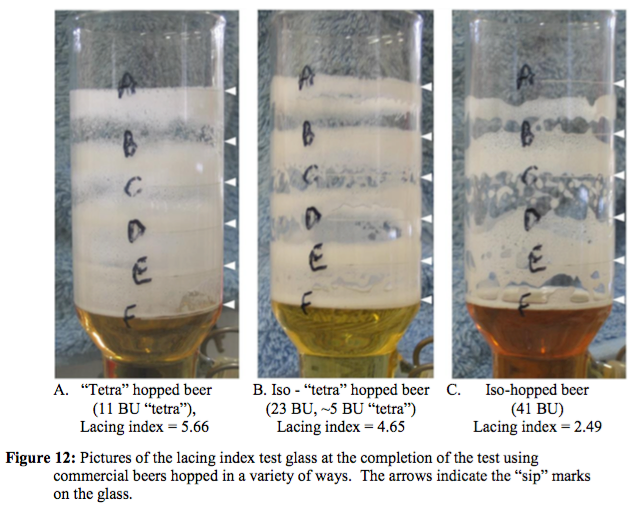
Ah, tetra and foam. That takes me back. Some rather interesting observations you can make on this. As beer lacing is controlled largely by hops, consider the following figure from Evans and Bamforth 2009. Think your tank, only smaller...
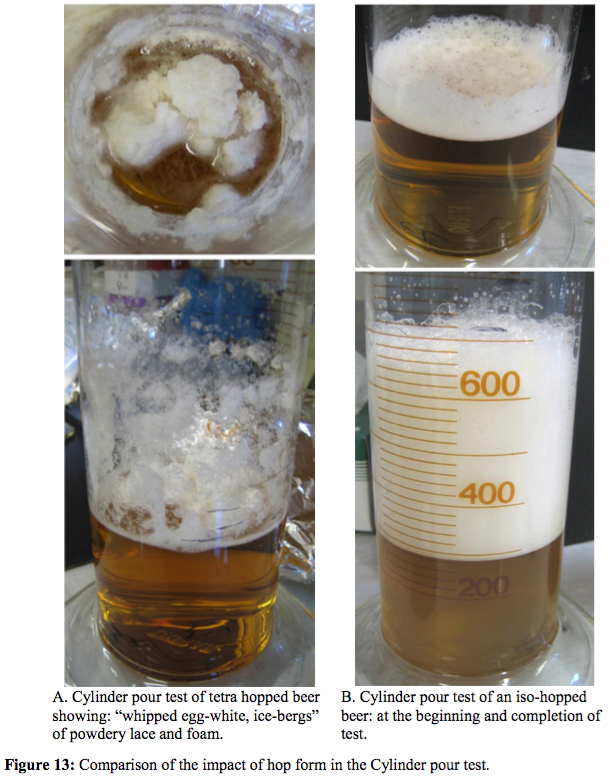
Then consider the effect of over foaming with tetra. On collapse you get these "foam-bergs."
References:
Evans, D. E., And Bamforth, C.W. 2009. Beer foam: Achieving a suitable head. In: BAMFORTH, C. W., RUSSELL, I., AND STEWART, G.G. (ed.) Handbook of alcoholic beverages: Beer, a quality perspective. Burlington MA: Elsevier. pp 1-60.
Evans, D. E., Surrel, A., Sheehy, M., Stewart, D., and Robinson, L.H. 2008. Comparison of foam quality and the influence of hop a-acids and proteins by five foam analysis methods. Journal of the American Society of Brewing Chemists, 65, 1-10, 10.1094/ASBCJ-2007-1129-01
Evans, D. E., Oberdieck, M., Redd, K.S., and Newman R. 2012. The comparison of the foam stability analysis methods Rudin and NIBEM with a manual pour method to identify beer characteristics that deliver consumers stable beer foam. Journal of the American Society of Brewing Chemists, 70, 70-78, 10.1094/ASBCJ-2011-1205-01
------------------------------
D. Evan Evans
The Tassie Beer Dr
Lindisfarne TAS
61 362439556
------------------------------